
An Overweight Dog Isn't Cute, It's Sick
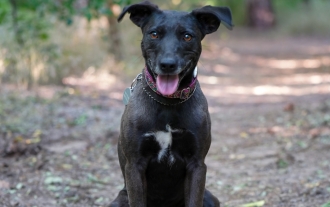 Portrait of a dog |
Lots of people smile and say their dog is "a bit chunky." I don't smile at that. Obesity sets off the same problems in a dog's body as it does in ours — only much more severe.
What happens inside an overweight dog's body?
The same thing that happens in ours. The heart and the circulatory system are put under strain, digestive problems appear, diabetes can develop, and the joints take a beating from every extra kilo. The difference is that a dog can't tell you when something hurts. It suffers in silence, and we often only notice once things have gotten serious.
Breeds already at higher risk
Some breeds are already prone to these conditions, such as dachshunds or German Shepherds. If a dog like that is also overweight, the problems compound. The extra load presses hardest exactly where the dog is already weakest.
"But he looks so sad…"
Sound familiar? The dog sits by the table, looks up with big eyes, and the owner's heart breaks: he must be starving. No. The dog has simply learned that this look works. Once it's earned a bite that way, it'll use the trick again.
And then there's the other line: "I love him, so I can't resist him." That's a huge mistake. If our child asked for chocolate for dinner every single night, we wouldn't give in just because they asked nicely. We know it wouldn't be good for them. It's no different with a dog.
An overweight dog isn't cute
I think it's important to say this plainly: an overweight animal isn't cute, and it isn't "chunky." An overweight animal is a victim of animal cruelty. It may not be intentional, it may come from love, but the end result is the same — a dog who finds it painful to move, struggles to breathe, and lives a shorter life than it could have.
What does loving your dog actually mean?
If you truly love your dog and want it to be well and healthy, you feed it food that's appropriate both in quality and in quantity.
In terms of quality, that means not the cheapest, most "economical" kibble, and not table scraps. Leftovers are often fatty, salty, heavily seasoned, and some are outright toxic to dogs — onion or chocolate, for instance.
In terms of quantity, it means not giving your dog enough to make it overweight. Treats count toward the daily total too.
How do you know if your dog is overweight?
On a dog at a healthy weight, the ribs aren't visible but are easy to feel. Viewed from above, you can see a waist. If you can only feel the ribs under firm pressure, or your dog looks barrel-shaped from above, it's time to make a change. If you're not sure, ask your vet.
What should you take away from this article?
Love isn't a full bowl. Love is your dog being healthy, moving easily, and staying with you for a long time.
If your dog keeps begging and you don't know how to say no in a way it understands, we're happy to help.
- 2026-10-19 - Az elhízott kutya nem cuki, hanem beteg
- 2026-10-16 - Kutyaugatás és a szomszédok
- 2026-10-13 - Mostantól ketten vagyunk: bemutatom a húgomat, Verát
- 2026-10-05 - Örökbefogadás: az utánkövetés többet ér, mint a kérdőív
- 2026-09-28 - Az erdőben a kutya pórázon van
- 2026-09-20 - Amikor a kutya nem érti a nemet: korlátok, szabályok és a közös nyelv